
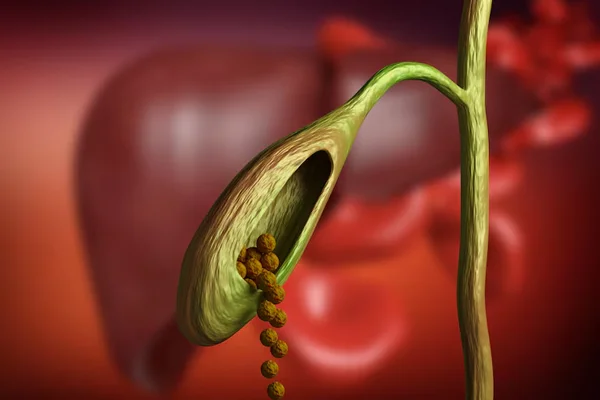
Gallbladder stones, commonly known as gallstones, are hardened deposits that develop inside the gallbladder. They may be as small as grains of sand or larger stones and can occur in people of different age groups. While some gallstones do not cause symptoms and may be discovered incidentally during an ultrasound, others can block the flow of bile and lead to significant abdominal pain and other complications.
Dr. Ankit Ahuja is a General and Laparoscopic Surgeon in Faridabad with specialized FNB training in Minimal Access Surgery. He provides evaluation and surgical management for gallbladder stones and other gastrointestinal conditions, using minimally invasive techniques when clinically appropriate.
The gallbladder is a small organ located beneath the liver. It stores and concentrates bile, a digestive fluid produced by the liver. Gallstones develop when substances present in bile, such as cholesterol or bilirubin, become concentrated and form solid particles.
Gallstones are generally classified into different types based on their composition. Cholesterol stones are common, while pigment stones develop due to changes involving bilirubin.
Not everyone with gallstones requires treatment. If stones are not causing symptoms or complications, a doctor may recommend observation in selected cases. However, recurrent pain, inflammation, infection, or blockage may indicate the need for active treatment.
Some people with gallstones remain completely symptom-free. When symptoms occur, they may include:
Gallstone-related pain can sometimes be severe and may last for several hours. Persistent or worsening symptoms should be medically evaluated rather than being assumed to be simple indigestion.
Gallstones can develop when there is an imbalance in the substances that make up bile. Several factors can contribute to their formation, including:
Having one or more risk factors does not necessarily mean that a person will develop symptomatic gallstones.
Diagnosis usually begins with a detailed medical history and physical examination. The doctor may ask about the location, duration, and pattern of abdominal pain as well as associated symptoms.
Ultrasound of the abdomen is commonly used to identify gallstones and assess the gallbladder. Depending on the patient's symptoms and clinical findings, additional blood tests or imaging investigations may be advised.
If a stone is suspected to have moved into the bile duct or if complications are present, further evaluation may be necessary.
Not every gallstone requires surgery. Treatment is generally considered when gallstones cause symptoms or complications.
Medical evaluation is particularly important when a patient experiences:
The recommended treatment depends on the patient's symptoms, investigations, overall health, and the location and characteristics of the stones.
For patients with symptomatic gallstones who require surgery, laparoscopic cholecystectomy is a commonly performed procedure. It involves removing the gallbladder through small incisions using a laparoscope and specialized surgical instruments.
During the procedure, the surgeon carefully separates and removes the gallbladder containing the stones. The operation is performed under anesthesia, and the surgical approach may vary depending on the patient's condition and intraoperative findings.
As a laparoscopic surgeon in Faridabad, Dr. Ankit Ahuja evaluates each patient to determine whether laparoscopic gallbladder surgery is appropriate.
When laparoscopic surgery is suitable, it may offer several advantages compared with traditional open surgery, including:
The recovery period varies between individuals and depends on factors such as overall health, the complexity of the procedure, and whether complications are present.
Before surgery, the patient undergoes a detailed clinical assessment. Previous medical records, ultrasound findings, blood investigations, medications, allergies, and existing medical conditions may be reviewed.
The surgeon explains the proposed procedure, expected recovery, possible risks, and alternatives where applicable. Patients may also receive specific instructions regarding food, medications, and fasting before surgery.
Good preoperative preparation helps the surgical team plan treatment according to the patient's individual needs.
Recovery after laparoscopic gallbladder removal varies from patient to patient. Following an uncomplicated procedure, many patients are able to gradually resume normal activities as advised by their surgical team.
Postoperative instructions may include guidance regarding:
Patients should follow their surgeon's instructions carefully and report symptoms such as persistent fever, increasing abdominal pain, repeated vomiting, jaundice, or unusual wound discharge.
Treatment depends on whether the stones are causing symptoms or complications. Asymptomatic gallstones may not require immediate treatment in many cases.
Once gallstones become symptomatic, particularly when they cause repeated attacks or complications, surgery may be recommended. Medicines may have a role in selected circumstances, but they are not suitable for every patient and may not provide a permanent solution.
A surgical consultation can help determine the most appropriate treatment based on the individual diagnosis.
Dr. Ankit Ahuja is a General and Laparoscopic Surgeon with specialized FNB training in Minimal Access Surgery. His advanced surgical training at GEM Hospital, Coimbatore, has provided focused exposure to laparoscopic and gastrointestinal surgical procedures.
His approach involves:
The goal is to select a surgical approach that is appropriate for the patient's condition while maintaining attention to safety, comfort, and recovery.
If you are experiencing recurrent upper abdominal pain, nausea after meals, or other symptoms suggestive of gallstones, timely evaluation can help identify the underlying cause. An ultrasound and clinical assessment can determine whether gallstones are present and whether treatment is required.
Dr. Ankit Ahuja provides consultation for gallbladder stones in Faridabad, including evaluation for patients who may require laparoscopic gallbladder surgery. The appropriate treatment is determined after assessing the patient's symptoms, investigations, medical history, and overall health.
Gallbladder stones are solid deposits that form inside the gallbladder due to changes in the composition of bile. They may remain symptom-free or cause pain and other complications.
A common symptom is recurring pain in the upper right or upper middle abdomen, often occurring after meals. Nausea, vomiting, bloating, and indigestion may also occur.
No. Gallstones that do not cause symptoms may not require immediate treatment. Surgery is generally considered when stones cause symptoms or complications.
Laparoscopic cholecystectomy is a minimally invasive procedure to remove the gallbladder. It is performed through small incisions using a camera and specialized surgical instruments.
Abdominal ultrasound is commonly used to detect gallstones. Depending on the patient's symptoms and clinical findings, blood tests or additional imaging may also be recommended.
Yes. Gallstones can sometimes cause complications such as gallbladder inflammation, infection, bile duct obstruction, or pancreatitis. Severe or persistent symptoms require prompt medical evaluation.
Recovery varies depending on the individual and the complexity of the surgery. Patients are generally advised to gradually return to normal activities according to their surgeon's postoperative instructions.
A General and Laparoscopic Surgeon can evaluate gallstones and determine whether surgical treatment is required. Dr. Ankit Ahuja provides consultation and surgical care for gallbladder and other gastrointestinal conditions in Faridabad.



Write a Reply or Comment