
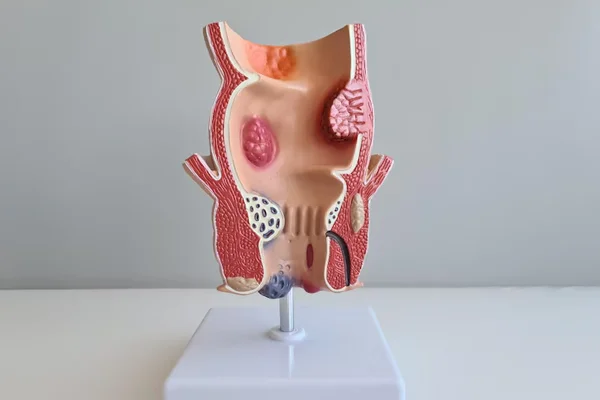
Piles, medically known as haemorrhoids, are swollen blood vessels in and around the anus. They are a common anorectal condition and may cause symptoms such as bleeding, itching, discomfort, pain, or a lump around the anal opening. Piles can occur internally or externally, and the severity of symptoms can vary from person to person.
Dr. Ankit Ahuja is a General and Laparoscopic Surgeon in Faridabad with specialized FNB training in Minimal Access Surgery. His areas of expertise include modern proctology and minimally invasive surgical procedures. He evaluates patients with piles to determine whether lifestyle measures, medicines, an office-based procedure, or surgery may be appropriate.
Piles are swollen vascular structures inside or around the anus. Internal haemorrhoids develop inside the anal canal, while external haemorrhoids occur beneath the skin around the anus.
Piles may develop or become symptomatic due to factors such as constipation, straining during bowel movements, prolonged sitting on the toilet, heavy lifting, pregnancy, increasing age, and being overweight.
Not every patient with piles requires surgery. Treatment depends on the symptoms, severity, grade of haemorrhoids, and response to conservative measures.
Common symptoms of piles may include:
Bleeding from the rectum should not automatically be assumed to be caused by piles. Other conditions can produce similar symptoms, so persistent or unexplained bleeding should be evaluated by a medical professional.
The exact cause of haemorrhoids is not always clear. However, several factors can increase the likelihood of developing symptomatic piles.
These include:
Improving bowel habits and avoiding excessive straining can help reduce symptoms and may also help prevent recurrence. Current clinical guidance recommends adequate fibre and fluid intake as important first-line measures for symptomatic haemorrhoids.
Piles can broadly be classified as internal or external.
Internal haemorrhoids are commonly graded according to how far they prolapse:
Grade I: Piles remain inside the anal canal.
Grade II: Piles protrude during bowel movements but return inside on their own.
Grade III: Piles protrude and may require manual repositioning.
Grade IV: Piles remain prolapsed outside the anus and cannot be pushed back.
Treatment depends on the grade, symptoms, bleeding, prolapse, and other clinical findings.
Diagnosis usually begins with a detailed medical history and physical examination. The doctor may ask about bleeding, bowel habits, pain, constipation, prolapse, and the duration of symptoms.
Depending on the symptoms, examination may include a digital rectal examination or anoscopy. Further investigations may be recommended when bleeding has no obvious cause or when symptoms suggest another gastrointestinal or colorectal condition.
A proper diagnosis is important because anal fissures, fistulas, infections, and other conditions can also cause anal discomfort or bleeding.
Mild or early piles can often be managed with dietary and lifestyle changes. Increasing fibre and fluid intake can help soften stools and reduce straining. Patients are also advised to avoid spending excessive time on the toilet.
Depending on the symptoms, a doctor may recommend medicines or topical treatments for temporary relief.
If symptoms continue despite conservative treatment, an appropriate minimally invasive or surgical procedure may be considered.
Laser-assisted proctology is a minimally invasive approach used for selected anorectal conditions. Depending on the type and grade of haemorrhoids, laser-based techniques may be considered as part of the treatment plan.
However, laser treatment is not automatically the best option for every patient with piles. The appropriate procedure depends on the grade of haemorrhoids, size, symptoms, prolapse, bleeding, previous treatment, and overall health.
Dr. Ankit Ahuja evaluates each patient individually before recommending laser-assisted or another suitable treatment approach.
Depending on the grade and symptoms, several treatments may be available. These can include:
Office-based procedures such as rubber band ligation are commonly used for selected internal haemorrhoids, while surgery may be considered for larger or advanced piles.
When an appropriate minimally invasive procedure is selected, potential benefits may include:
The outcome and recovery period vary depending on the procedure, severity of piles, and individual patient factors.
Recovery depends on the treatment performed. Patients may be advised to maintain adequate hydration, consume sufficient dietary fibre, avoid straining, and follow prescribed medication and wound-care instructions.
Regular bowel habits are particularly important because constipation and straining can contribute to persistent or recurrent symptoms.
After a procedure, patients should follow their surgeon's recommendations regarding physical activity, diet, medication, and follow-up appointments.
You should consider medical evaluation if:
Severe pain, continuous bleeding, a large amount of blood, blood clots, fever, or pus requires prompt medical assessment.
Dr. Ankit Ahuja is a General and Laparoscopic Surgeon with specialized FNB training in Minimal Access Surgery. His surgical experience includes advanced minimally invasive procedures and modern proctology.
If you are experiencing bleeding, itching, pain, swelling, or a lump around the anus, timely evaluation can help determine whether piles are responsible and what treatment may be appropriate.
Dr. Ankit Ahuja provides piles treatment in Faridabad, including evaluation and minimally invasive treatment options for suitable patients. Depending on the severity and grade of haemorrhoids, treatment may range from lifestyle management and medicines to procedures or surgery.
A personalized consultation can help determine the most appropriate treatment based on your symptoms and clinical findings.
Piles, or haemorrhoids, are swollen blood vessels inside or around the anus. They can be internal or external and may cause bleeding, itching, pain, swelling, or prolapse.
Common symptoms include bright red bleeding after bowel movements, itching, anal discomfort, pain, lumps around the anus, and prolapse.
Yes. Mild piles may improve with adequate fibre and fluid intake, improved bowel habits, and appropriate medical treatment. Persistent or advanced piles may require a procedure or surgery.
Laser-assisted techniques may be considered for selected patients, depending on the type and severity of haemorrhoids. A surgeon should assess the condition before recommending a specific procedure.
No. Many patients can be managed without surgery. The appropriate treatment depends on the grade of piles, symptoms, prolapse, bleeding, and response to conservative treatment.
Yes. Piles can recur, particularly if constipation, straining, or other contributing factors continue. Maintaining healthy bowel habits and adequate fibre and fluid intake can help reduce the risk of recurrence.
No. Rectal bleeding can have several causes. Persistent, unexplained, or significant bleeding should be medically evaluated rather than automatically attributed to piles.
A General and Laparoscopic Surgeon can evaluate and treat piles. Dr. Ankit Ahuja provides consultation and appropriate surgical or minimally invasive treatment options for piles in Faridabad.



Write a Reply or Comment