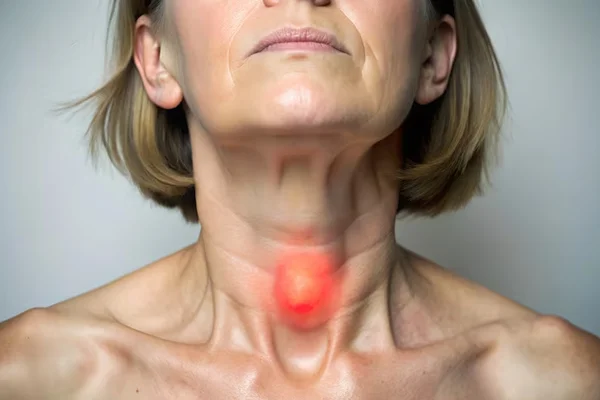
Thyroid swelling refers to an enlargement or noticeable lump in the thyroid gland, which is located at the front of the neck. It may occur because of a thyroid nodule, goitre, thyroid cyst, inflammation, or other thyroid conditions. While many thyroid nodules are benign, a new or persistent swelling should be properly evaluated to determine its cause.
Dr. Ankit Ahuja is a General and Laparoscopic Surgeon in Faridabad with specialized FNB training in Minimal Access Surgery. He provides evaluation and surgical consultation for patients with thyroid swelling and thyroid nodules, with treatment planned according to the clinical findings, investigations, and individual requirements.
Thyroid swelling may appear as a visible or palpable enlargement at the lower front of the neck. It can involve the entire thyroid gland or occur as one or more nodules within the gland.
Some thyroid nodules are discovered incidentally during a routine examination or imaging performed for another reason. Others become noticeable as a lump in the neck or may cause pressure-related symptoms when they become larger.
A thyroid swelling does not necessarily mean thyroid cancer. Most thyroid nodules are non-cancerous, but appropriate assessment is important to identify nodules that require further investigation.
Thyroid swelling can have several possible causes, including:
The cause cannot always be determined simply by examining the swelling. Blood tests, ultrasound and, when indicated, fine-needle aspiration biopsy may be required.
A small thyroid nodule may not cause any symptoms. Larger nodules or an enlarged thyroid can sometimes cause:
Some thyroid nodules can also produce excess thyroid hormone, which may lead to symptoms such as unexplained weight loss, excessive sweating, tremors, nervousness, or a rapid or irregular heartbeat.
Evaluation generally starts with a detailed medical history and examination of the neck. The doctor assesses the size and characteristics of the swelling and checks whether the thyroid appears generally enlarged or contains one or more nodules.
Blood tests may include TSH and thyroid hormone levels, such as T4. These tests help determine whether the thyroid is functioning normally, is underactive, or is producing excess hormone.
Thyroid ultrasound is an important investigation for thyroid swelling. It can show the size, structure and composition of a thyroid nodule and help identify features that may require further evaluation.
Ultrasound can also help determine whether a swelling is predominantly solid or fluid-filled and can be used to monitor nodules that do not immediately require surgery.
If a thyroid nodule has features or a size that warrant further evaluation, fine-needle aspiration (FNA) may be recommended. During FNA, a thin needle is used to collect cells from the nodule for examination by a pathologist. Ultrasound guidance can be used to accurately target the nodule.
Not every thyroid nodule requires biopsy. The decision is generally based on the ultrasound appearance, size, clinical factors and overall assessment.
No. Most thyroid nodules are benign. However, certain ultrasound characteristics may indicate a higher risk and require further evaluation.
A physical examination or blood test alone cannot reliably determine whether a thyroid nodule is cancerous. Ultrasound and, when clinically indicated, biopsy provide more useful information for diagnosis.
Treatment depends on the underlying cause.
Some benign thyroid nodules do not require immediate treatment. Your doctor may recommend periodic clinical examination, thyroid function tests and ultrasound monitoring to check whether the nodule changes over time.
If thyroid swelling is associated with a thyroid hormone disorder or inflammation, appropriate medical treatment may be recommended according to the diagnosis.
Surgery may be considered when a thyroid swelling:
The extent of thyroid surgery depends on the diagnosis, size and location of the swelling, involvement of the thyroid gland, and other clinical factors.
Thyroid surgery, also known as thyroidectomy, involves removing part or all of the thyroid gland when surgery is clinically indicated.
Depending on the condition, surgery may involve removal of one side of the thyroid (lobectomy/hemithyroidectomy) or removal of the entire thyroid gland (total thyroidectomy).
The appropriate surgical procedure is decided after reviewing the clinical examination, ultrasound findings, biopsy results when required, thyroid function, and other relevant factors.
Recovery varies depending on the type of thyroid surgery and the individual patient's health.
After surgery, patients are generally provided instructions regarding:
If the entire thyroid gland is removed, thyroid hormone replacement is generally required because the body can no longer produce thyroid hormone naturally.
A new or persistent swelling in the neck should be medically evaluated, particularly if it is increasing in size or associated with other symptoms.
You should seek medical attention if you notice:
Breathing or swallowing difficulties associated with neck swelling warrant prompt medical assessment.
Dr. Ankit Ahuja is a General and Laparoscopic Surgeon with specialized FNB training in Minimal Access Surgery. His surgical experience includes advanced minimally invasive procedures and general surgical conditions.
For patients with thyroid swelling, his approach focuses on:
A thyroid swelling can have many causes, and the appropriate treatment depends on an accurate diagnosis. If you have noticed a lump or swelling in your neck, timely evaluation can help determine whether it requires observation, medical management, biopsy, or surgery.
Dr. Ankit Ahuja provides thyroid swelling evaluation and surgical consultation in Faridabad, with treatment planned according to the patient's symptoms, investigation results, thyroid condition and individual requirements.
Thyroid swelling may occur due to thyroid nodules, goitre, cysts, inflammation, thyroid hormone disorders, benign growths or, less commonly, thyroid cancer.
No. Most thyroid nodules are benign. However, a new or persistent thyroid swelling should be evaluated to identify nodules that may require further testing.
Evaluation may include thyroid function tests such as TSH and T4, thyroid ultrasound and, when indicated, fine-needle aspiration biopsy.
No. The need for biopsy depends on factors including the nodule's ultrasound appearance, size and clinical characteristics.
Surgery may be recommended for selected suspicious or cancerous nodules, large symptomatic swellings, pressure symptoms, or other conditions where removal of part or all of the thyroid is appropriate.
Yes. A sufficiently large thyroid nodule or enlarged thyroid gland can put pressure on the oesophagus and cause difficulty swallowing.
Large thyroid nodules or an enlarged thyroid can sometimes press on the windpipe and cause breathing difficulty. Prompt medical evaluation is recommended if this occurs.
A General Surgeon can evaluate thyroid swelling and provide surgical consultation when required. Dr. Ankit Ahuja provides thyroid swelling evaluation and appropriate surgical treatment options in Faridabad.


Write a Reply or Comment