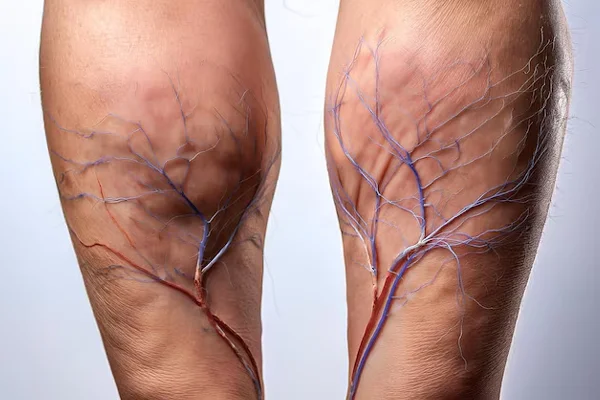
Varicose veins are enlarged, twisted and swollen veins that commonly appear on the legs. They develop when the valves inside the veins do not work properly, allowing blood to collect and increasing pressure within the veins. This can make the veins become enlarged and visible beneath the skin.
While varicose veins are not always serious, they can cause aching, heaviness, swelling, itching, skin changes and, in some cases, complications such as ulcers, bleeding or superficial vein thrombosis.
Dr. Ankit Ahuja is a General and Laparoscopic Surgeon in Faridabad with specialized FNB training in Minimal Access Surgery. He provides evaluation and surgical consultation for patients with varicose veins and recommends treatment according to the severity of symptoms, vein involvement and individual clinical findings.
Healthy veins contain valves that help blood move upward toward the heart. When these valves become weak or damaged, blood can flow backward and collect in the veins. Over time, the affected veins may become enlarged, twisted and prominent under the skin.
Varicose veins most commonly affect the legs, particularly when a person spends long periods standing or sitting. Some people have visible veins without significant symptoms, while others experience discomfort or develop skin-related complications.
Not every person with varicose veins requires an intervention. Treatment is generally considered when symptoms are significant, the condition is progressing, or complications develop.
Varicose veins may cause different symptoms depending on their severity.
Common symptoms include:
Symptoms may become more noticeable after standing for long periods and can improve when the legs are rested or elevated.
The main underlying problem is often malfunctioning valves within the veins. When these valves do not close properly, blood can flow backward and accumulate in the veins.
Several factors can increase the likelihood of developing varicose veins, including:
Varicose veins can affect anyone, although some people have a higher risk because of their age, lifestyle, genetics or other medical factors.
Treatment may be considered when varicose veins cause persistent symptoms or complications. A specialist evaluation is particularly useful if you experience:
NICE guidance recommends specialist assessment for people with symptomatic varicose veins and certain complications such as skin changes or venous ulcers.
A detailed clinical assessment is the first step in evaluating varicose veins. The doctor examines the visible veins, checks for swelling or skin changes and discusses symptoms and medical history.
A duplex ultrasound is commonly used to assess blood flow through the leg veins. It can identify abnormal backward blood flow, known as venous reflux, and helps the specialist understand which veins are affected.
Duplex ultrasound is also useful for planning the most appropriate treatment.
The treatment plan is based on the ultrasound findings, symptoms, severity of the condition and overall health.
Mild or asymptomatic varicose veins may not require an invasive procedure. Lifestyle measures can help manage symptoms and support healthy circulation.
These may include:
Regular exercise and elevating the legs can help reduce symptoms such as swelling and discomfort.
Compression stockings may also help with swelling and pain in selected patients. They should be appropriately fitted and are not suitable for everyone, particularly people with certain arterial circulation problems.
When symptoms persist or treatment is clinically indicated, minimally invasive procedures may be considered.
Endovenous laser treatment (EVLT/EVLA) uses laser energy to close the affected vein from inside. A thin catheter is introduced into the vein, generally under ultrasound guidance, and laser energy is delivered to the vein wall.
The treated vein is closed, and blood is redirected through healthier veins. Endovenous thermal ablation is commonly used for suitable symptomatic varicose veins.
Radiofrequency ablation uses controlled heat generated by radiofrequency energy to close the problematic vein. It is another endovenous treatment option for selected patients.
Foam sclerotherapy involves injecting a specially prepared solution into the affected vein. The solution irritates the vein lining and causes the vein to close.
It may be considered when thermal ablation is unsuitable or for certain residual or smaller veins.
Traditional surgery, including ligation and stripping, may be considered when less invasive treatment options are unsuitable or based on the patient's individual condition.
The choice between different procedures should be made after clinical examination and appropriate imaging.
For suitable patients, minimally invasive procedures may offer several advantages, including:
For example, endothermal treatment is generally performed using local anaesthesia, and many patients can return home on the same day.
However, outcomes and recovery vary from person to person.
Recovery depends on the procedure performed and the patient's overall condition. Following minimally invasive treatment, patients are generally encouraged to move around and gradually return to normal activities according to their surgeon's instructions.
Some patients may experience temporary:
Strenuous exercise may need to be avoided for a short period, after which activity can usually be increased gradually.
Follow-up may be recommended depending on the procedure and clinical situation.
Varicose veins can recur or new varicose veins can develop after treatment. Treating an affected vein does not necessarily prevent other veins from becoming varicose in the future.
Long-term management may include maintaining a healthy weight, staying physically active and avoiding prolonged periods of standing or sitting when possible.
Although many cases are uncomplicated, varicose veins can sometimes lead to problems such as:
A sore or ulcer on the leg that does not heal should be medically evaluated.
If a varicose vein suddenly becomes painful, red, hard or starts bleeding, medical assessment is recommended.
Consider consulting a specialist if your varicose veins are associated with:
Sudden chest pain, difficulty breathing or coughing up blood after a vein-related problem requires emergency medical attention.
Dr. Ankit Ahuja is a General and Laparoscopic Surgeon with specialized FNB training in Minimal Access Surgery. His experience in minimally invasive surgical techniques supports a careful, individualized approach to patients requiring surgical evaluation.
Visible, swollen veins are not always a reason for surgery, but persistent symptoms or skin changes should not be ignored. A proper clinical evaluation and, when appropriate, duplex ultrasound can help determine the severity of venous disease and guide treatment planning.
Dr. Ankit Ahuja provides varicose veins treatment in Faridabad, including clinical evaluation and minimally invasive or surgical treatment options for suitable patients. Depending on the findings, treatment may include lifestyle management, compression therapy, endovenous laser treatment, radiofrequency ablation, sclerotherapy or surgery.
The recommended approach depends on the patient's symptoms, ultrasound findings, vein involvement and overall health.
Varicose veins are enlarged and twisted veins, most commonly seen in the legs. They develop when faulty vein valves allow blood to collect within the veins.
Common symptoms include aching, heaviness, pain, swelling, itching and visible enlarged veins. Skin changes may occur in more advanced cases.
No. Varicose veins without symptoms or complications may not require an invasive treatment. Management depends on symptoms, progression and clinical findings.
A duplex ultrasound is commonly used to assess blood flow, identify venous reflux and help plan treatment.
Endovenous laser treatment uses laser energy to close the affected vein from inside. It is a minimally invasive option for selected patients.
The level of discomfort depends on the procedure and individual patient. Many endovenous procedures are performed under local anaesthesia, although temporary soreness or bruising may occur afterward.
Yes. Recurrence or development of new varicose veins is possible. Regular physical activity and maintaining a healthy weight may help support overall venous health.
A surgeon experienced in vascular and minimally invasive procedures can evaluate varicose veins and recommend appropriate treatment. Dr. Ankit Ahuja provides evaluation and treatment options for varicose veins in Faridabad.


Write a Reply or Comment